Your Kitchen Sponge – The Bacteria Hotel
Your kitchen sponge isn’t just a cleaning tool; it’s a bacteria breeding ground. Studies show that sponges can harbor more bacteria than a toilet seat, including E. coli, Salmonella, and Staphylococcus. And no, microwaving or soaking it in bleach won’t fix the problem completely.
Your Toothbrush Holder – The Forgotten Germ Trap
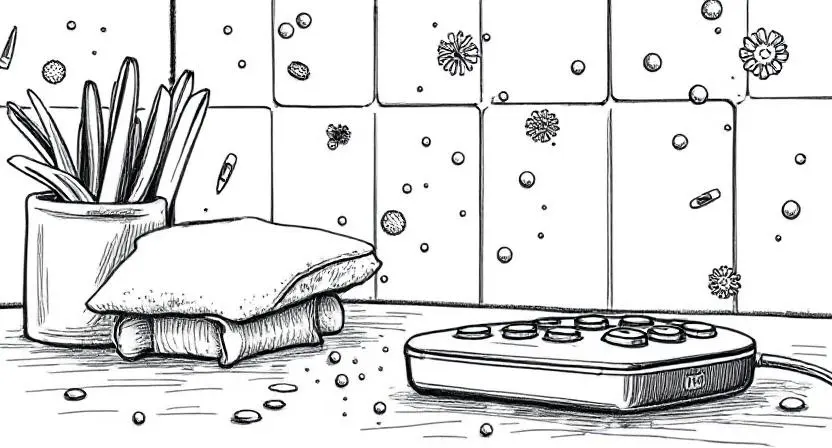
That little cup holding your toothbrush? It’s collecting bacteria from your toothbrush, water splashes, and even airborne particles from your toilet (yes, toilet plume is real). Regularly washing and disinfecting your toothbrush holder can help, but let’s be honest—when’s the last time you actually did that?
Your Remote Control – The Filthy Fingerprint Collector
Your TV remote is touched by everyone in the house, often while eating, sneezing, or just after using the restroom. It rarely gets cleaned, making it one of the germiest items in your home. Next time you binge-watch your favorite show, think about what’s lurking on those buttons.
Your Cell Phone – Your Personal Germ Magnet
You take it everywhere—including the bathroom—but how often do you clean it? Your phone screen can carry 10 times more bacteria than a toilet seat! Regularly wiping it with disinfectant wipes can help, but most of us are guilty of neglecting this step.
Your Kitchen Sink – The Hidden Biohazard Zone
You wash your dishes here, but did you know your kitchen sink can contain more bacteria than your toilet? Food particles, raw meat residue, and standing water create the perfect environment for dangerous microbes to thrive. A deep clean with disinfectant is necessary—frequently!
FAQ: Frequently Asked Questions
-
What is the dirtiest place in a home?
The kitchen sponge is often cited as the dirtiest object in a home, harboring millions of bacteria, including E. coli and Salmonella. -
How often should I replace my kitchen sponge?
Experts recommend replacing your kitchen sponge every one to two weeks to prevent bacteria buildup. -
How can I disinfect my phone properly?
Use a disinfectant wipe or a microfiber cloth lightly dampened with a mix of water and isopropyl alcohol. Avoid excessive moisture near the charging port. -
Is my toilet cleaner than my phone?
Surprisingly, yes! Phones can carry 10 times more bacteria than a toilet seat because they are rarely cleaned and are constantly handled. -
What’s the best way to clean a remote control?
Use a disinfectant wipe or a cloth with rubbing alcohol to clean buttons and crevices. Do this at least once a week to reduce germ buildup.